
ZHI YAN CANDY MACHINERY Co.,Ltd Leading technology Candy making machinemanufacturers
Contact No.:+86 18221614363
Email:candymachinery@qq.com
Contact No.:+86 18221614363
Email:candymachinery@qq.com
Adr :industrial zone, shanghai
Phone : +86 18221614363
Email : candymachinery@qq.com
Tel : +86 18221614363
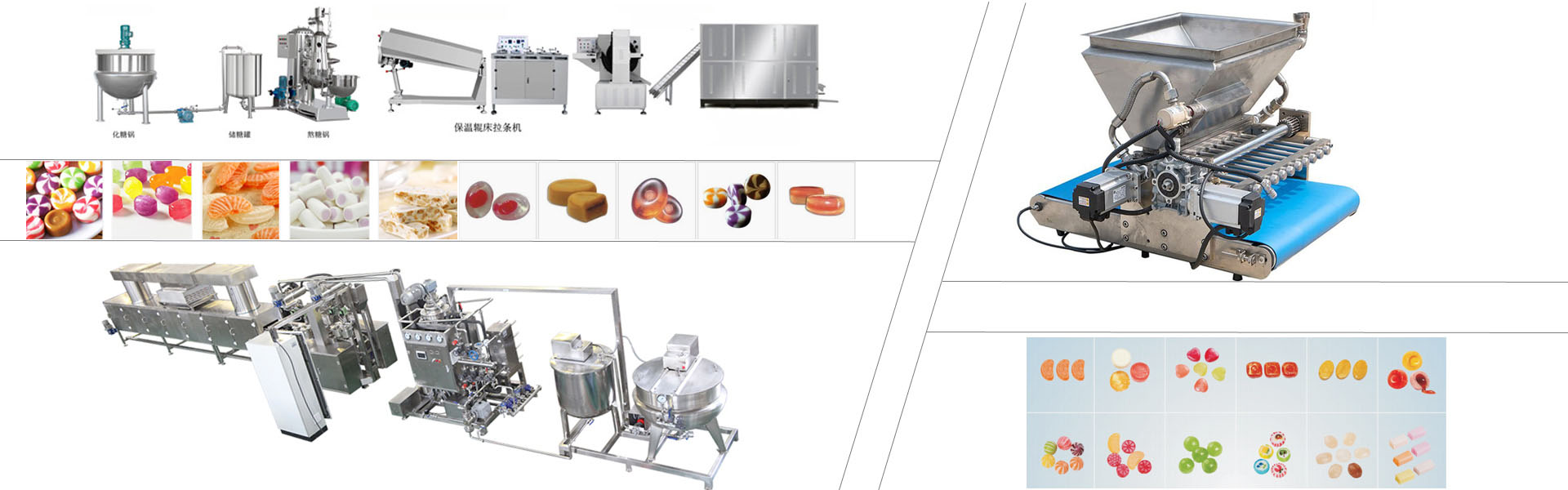
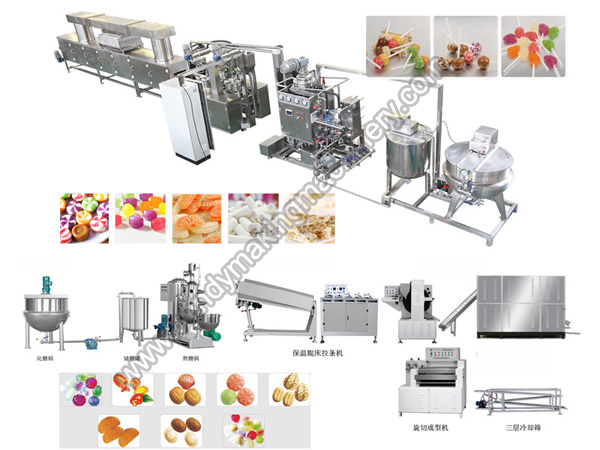
Sugar boiling equipment for fully automatic gummy candy, hard candy, and lollipop candy production line: If the set temperature is not reached or the moisture content of the sugar paste is too high, identify the cause by troubleshooting each of the following scenarios.
We must first understand the principles of sugar boiling before we can solve the problem. Zhengzhou Zhenyan Machinery Equipment Factory is here to help you resolve these issues.
The goal of the candy boiling process is to evaporate the moisture from the sugar paste.
If the following situations occur—such as the temperature control display failing to reach the set temperature—moisture will not be fully removed, resulting in finished products with excessive moisture content, stickiness, a tendency to recrystallize, and a shortened shelf life.
Candy boiling kettles are divided into two main categories: vacuum boiling machines (the mainstream choice for hard candies) and atmospheric pressure boiling kettles. The following troubleshooting steps apply to both.
Vacuum Sugar Boiling: Insufficient vacuum pressure lowers the boiling point of water, preventing the sugar syrup from reaching the required temperature; insufficient heat source or poor heat exchange results in inadequate heating capacity; another possibility is inaccurate temperature measurement, creating the false impression that “the temperature is too low.”
I. First, distinguish between: [false temperature readings] and [actually low sugar syrup temperature]
1. Temperature sensor malfunction (a common false alarm)
1) Sugar scale or a layer of caramelized sugar on the thermocouple or PT100 temperature probe acts as thermal insulation, causing the probe to read a temperature far lower than the actual sugar syrup temperature. The control system continues to heat, but the display consistently fails to reach the set value.
Solution: Remove the probe, grind off and clean the sugar scale; clean regularly; ensure the probe is fully immersed in the sugar paste—it must not be suspended or touching the pot wall.
2) Improper probe installation location
If installed in the steam jacket or in the steam zone above the liquid surface without contacting the flowing sugar paste, readings will be too low.
3) Temperature control instrument parameter drift or compensation error
Calibrate the temperature control instrument by comparing it with the actual sugar syrup temperature measured using a portable infrared thermometer or a handheld immersion thermometer.
Verification: Use an independent thermometer to measure the temperature of the sugar syrup directly.
Actual temperature ≈ instrument reading: Indicates insufficient heating
Actual temperature significantly higher than the instrument reading: Temperature measurement system malfunction
II. Key Troubleshooting for Vacuum Sugar Cooking Equipment (Continuous Hard Candy Cooking Kettles, Batch Vacuum Sugar Cooking Tanks)
Possible Causes of Malfunctions
1: Insufficient Vacuum (Common)
Vacuum sugar cooking relies on negative pressure to lower the boiling point of water while enhancing dehydration. If the vacuum is poor, water vapor cannot be exhausted; heat is carried away by the water vapor, making it difficult for the sugar syrup to heat up and causing the moisture content to remain high.
Troubleshooting Checklist:
1. Vacuum pump malfunction
Water-ring vacuum pump: Insufficient water supply pressure, excessively high water temperature, or scale buildup on the impeller; Oil-sealed rotary vane pump: Degraded oil or clogged intake filter.
2. Pipeline Leaks
Air leaks from the aged seal ring on the kettle lid, manhole flanges, sight glasses, discharge valves, feed pipes, or condenser lines; air ingress disrupts the vacuum.
Leak Detection: Conduct a vacuum hold test by closing all inlets and outlets to verify if the vacuum can be maintained.
3. Poor Heat Exchange in the Condenser
Insufficient cooling water flow in the vacuum system condenser, excessively high water temperature, or scale buildup on pipe walls prevent water vapor from condensing, causing the partial pressure of vapor inside the tank to rise and preventing the vacuum from being established.
4. Blocked Exhaust Pipes
Sugar vapor generated during sugar boiling carries sugar mist, which accumulates and adheres to the pipes over time, reducing the cross-sectional area of the vent.
Fault Categories
2: Insufficient Heat Source Supply (Mostly found in steam-type sugar boilers)
Most sugar boiling equipment uses jacketed steam heating.
1. Steam pressure does not meet equipment requirements (sugar boiling generally requires 0.6–0.8 MPa saturated steam)
Insufficient steam supply from the boiler room, malfunctioning pipeline pressure-reducing valves, poor insulation of steam piping, or failure to drain condensate.
2. Water accumulation in the jacket
Condensate in the jacket cannot be drained in a timely manner; the water occupies the heat exchange space, preventing steam from contacting the kettle walls, causing heat transfer efficiency to plummet.
Inspection: Check for clogged or malfunctioning jacket steam traps! Steam traps are a common failure point.
Symptoms: Knocking sounds from the jacket, slow temperature rise, and failure to reach the target temperature for an extended period.
Remedy: Repair or replace the steam trap; install a bypass drain valve for regular drainage.
3. Scale Deposits on Jacket Inner Walls (Hot Water/Thermal Oil Heating Models)
Scale acts as an insulator, preventing heat from transferring to the sugar syrup.
Fault Categories
3: Process and Feed Parameter Issues
1. Excessive Feed Flow Rate (Continuous Sugar Boiling Line)
The sugar syrup feed rate exceeds the equipment’s evaporation capacity, resulting in insufficient residence time and an inability to heat and dehydrate the syrup in time.
Action: Appropriately reduce the feed flow rate and extend the boiling time.
2. Excessively high initial moisture content of raw materials
Insufficient pre-treatment and concentration of the syrup results in excessively high initial moisture content entering the sugar boiling machine, exceeding the equipment’s capacity.
3. Abnormalities in the agitation system
III. Atmospheric Pressure Sugar Cooking Pot (Soft Candies, Certain Traditional Candies)
Under atmospheric pressure, the boiling point of water is 100°C. To raise the sugar syrup to over 140°C, water must be continuously evaporated;
Common reasons for difficulty in heating:
1. Insufficient output power from the burner or thermal oil furnace;
2. Caramel residue buildup on the bottom of the kettle, causing thermal insulation;
3. Opening the lid during operation allows large amounts of cold air to enter, resulting in continuous heat loss;
4. Poor moisture and smoke exhaust causes water vapor to accumulate inside the kettle, inhibiting water evaporation.
IV. Chain Reactions and Assessment Criteria for Excessive Moisture in Sugar Syrup
Temperature fails to rise → Insufficient driving force for water evaporation → Moisture exceeds standards:
Standard finished moisture content for hard candies: ≤ approximately 3.0%; The moisture content of the sugar paste at the end of boiling typically needs to be controlled between 1.5% and 2.5%.
For every 3–5°C drop in temperature, the final moisture content will increase significantly.
Important Reminder: Do not simply force the temperature up by raising the setpoint!
If vacuum is insufficient, blindly increasing steam pressure to force heating can easily lead to: localized caramelization of the sugar paste, darkening of color, development of a caramel flavor, and recrystallization.
V. Recommended Standard Troubleshooting Sequence
1. Calibrate the temperature probe to confirm that the low temperature is actual and not a false reading
2. Check the vacuum system: Verify that the vacuum gauge reading reaches the equipment’s rated vacuum; perform a pressure-holding test; inspect the vacuum pump, cooling water, and steam traps
3. Check the heat source: Steam pressure, steam traps, presence of water accumulation in the jacket, and pipe insulation
4. Check for leaks: Inspect the kettle lid and valve flanges for air leaks
5. Continuous production lines: Verify feed flow rate, moisture content of incoming syrup, and agitation operation status
6. Cleaning: Remove sugar deposits from the probe, descale the jacket, clean sugar residue from vacuum piping, and descale the condenser
VI. Temporary Adjustment Measures
1. Appropriately reduce the feed rate to extend the boiling retention time;
2. Ensure sufficient and cold cooling water for the vacuum pump;
3. Fully open the jacket drain valve to discharge accumulated water from the jacket;
4. Minimize frequent opening of equipment lids to prevent air leaks and heat loss;
5. Strictly control syrup concentration in the preceding process to reduce the initial moisture content of the feed.
VII. Reference Failure Cases
Case 1: Instrument temperature consistently deviates by 5°C from the setpoint; moisture content is too high
The probe was coated with sugar scale; temperature returned to normal after cleaning.
Case 2: Steam pressure is normal, but heating is slow and vacuum cannot be raised sufficiently
The jacket drain valve was clogged, causing a large amount of condensate to accumulate in the jacket.
Case 3: Heating is normal during the early stages of batch sugar boiling, but the temperature fails to rise in the later stages
The vacuum line was clogged by long-term accumulation of sugar mist, resulting in poor venting.
All rights reserved:ZHI YAN CANDY MACHINERY Co.,Ltd SitemapSitemapManufacturer Candy making machine candy production line Toffee production line biscuit production line lollipop production line Gummy production line chocolate production line chewing gum production line Popping boba production line


