
ZHI YAN CANDY MACHINERY Co.,Ltd Leading technology Candy making machinemanufacturers
Contact No.:+86 18221614363
Email:candymachinery@qq.com
Contact No.:+86 18221614363
Email:candymachinery@qq.com
Adr :industrial zone, shanghai
Phone : +86 18221614363
Email : candymachinery@qq.com
Tel : +86 18221614363
The reason for the unstable softness and hardness of the dough in the biscuit production line
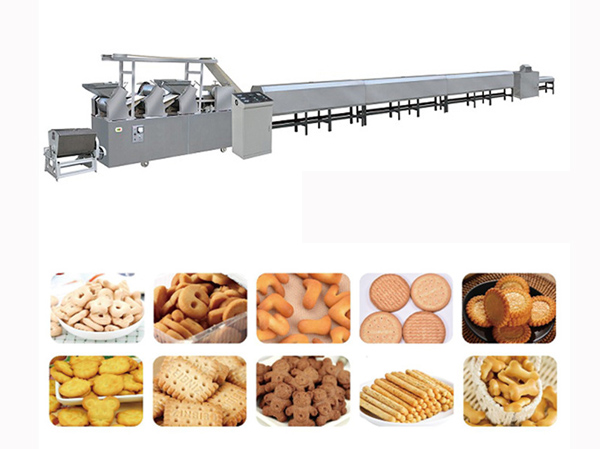
The reason for the fluctuation of the softness and hardness of the dough in the same batch of biscuits processed by the biscuit production line and the investigation and rectification plan. The hardness of the dough in the same pot/batch fluctuates, mainly due to the lack of stable control over moisture, oil, gluten, temperature, mixing, and feeding uniformity. It is not simply a matter of how much water is added, but is investigated item by item from high frequency to low frequency.
1、 Inaccurate ingredient measurement (common)
1. Unstable measurement of water
-Manual water discharge, fluctuation of flow meter, fluctuating water pressure; The switching temperature difference between ice water and room temperature water is large
-Fluctuations in moisture content of flour itself: uneven dryness and wetness before and after the same bag of flour (different dryness and wetness when stacked up and down)
Solution: Use a water pump to add water quantitatively; Fixed water temperature; Measure the moisture content of each truck of flour entering the factory and adjust the amount of water added in real time.
2. Uneven discharge of solid materials
Sugar, oil, milk powder, salt, and leavening agents fall at different speeds; The melting temperature of the oil fluctuates, and it is fed in a semi-solid state.
Constant temperature melting and insulation of oil and grease; All raw materials should be quantitatively fed using an electronic scale and not estimated.
2、 Changes in Flour and Gluten
1. Flour is separated and layered in the silo, and the gluten strength of the flour produced in the front is different from that of the gluten in the back half;
2. Inconsistent development of gluten during the mixing process:
-Mixing speed/time fluctuation; The load of the noodle machine is unstable (voltage fluctuation)
-Overkneading the first half of the pot can make the dough harder due to strong gluten; Insufficient kneading of the second half of the pot will make the dough softer
Fixed and surface program (low-speed time to high-speed time); Monitoring and surface current; The flour is first homogenized in the mixing bin.
3、 Fluctuations in surface temperature (very critical)
The temperature of the dough directly affects its hardness: the higher the temperature, the softer the oil and gluten, and the softer the dough; When the temperature is low, it becomes hard.
Source of fluctuation:
-Inconsistent changes in environmental temperature and friction heating with noodle machines
-Unstable amount of ice water added
Target to control the final temperature of the dough at 22-26 ℃ (lower for sweet cookies and slightly higher for baking soda); Record the discharge temperature of each pot of dough.
4、 The problem of feeding sequence and mixing uniformity
1. Oil and sugar are not fully emulsified evenly, and the dough is soft in areas with more oil and hard in areas with less oil;
2. The leavening agent first comes into contact with water, causing local activation and texture differences;
Standard feeding sequence: first add water and sugar, then add auxiliary materials → emulsify → then add flour and oil;
It is strictly prohibited to mix flour directly with local lumps.
5、 Equipment issues with the noodle machine itself
1. The mixing blade is worn and the gap is too large, and some areas inside the bucket cannot be kneaded; Uneven softness and hardness in some parts of the pot;
2. The sealing of the dough machine is leaking water/oil; The jacket cooling water is intermittently connected and disconnected;
3. Incomplete feeding resulted in residual dough from the previous pot being mixed into the next batch.
Regularly check the gap between the mixing arms; Empty each pot and noodle bucket; Check if the cooling jacket water circuit is blocked.
6、 Static relaxation stage fluctuation
The same batch of dough is divided into blocks and left to stand for varying lengths of time: the ones in front become loose and soft over time; As soon as it was well pressed, the surface became too hard.
Unified relaxation time, dough covered with moisture to prevent surface drying and hardening.
Quick on-site judgment method
1. Just out of the pot, measure the temperature of the dough;
2. Measure the hardness of the dough at the front, middle, and back positions respectively;
-The overall softness and hardness of the whole pot may be due to ingredient or water temperature issues
-The same piece of dough may be hard or soft due to uneven mixing or poor emulsification
Simple adjustment strategy (production emergency)
-The dough is too hard: add a small amount of warm water and extend the relaxation time appropriately
-Soft dough: Add a small amount of flour to reduce the final temperature of the dough
Do not repeatedly add a large amount of water and powder in one pot, as it may cause problems such as cookie formation, shrinkage, and cracking
All rights reserved:ZHI YAN CANDY MACHINERY Co.,Ltd SitemapSitemapManufacturer Candy making machine candy production line Toffee production line biscuit production line lollipop production line Gummy production line chocolate production line chewing gum production line Popping boba production line


